
90% of my blog traffic is now obsolete thanks to Google's AI Summary and chat interfaces like ChatGPT. Developers used to search "how to X" or search a specific error message. That would land them on my blog. Now Google's AI Summary shows my content mixed in with similar sources right on the search results page. And the second half of that traffic is gone too, because developers just paste the error message into an AI chat interface instead of searching. If you think about it, they don't need to search "how to do X" anymore, they just tell their AI agent to implement X, right from the command line.
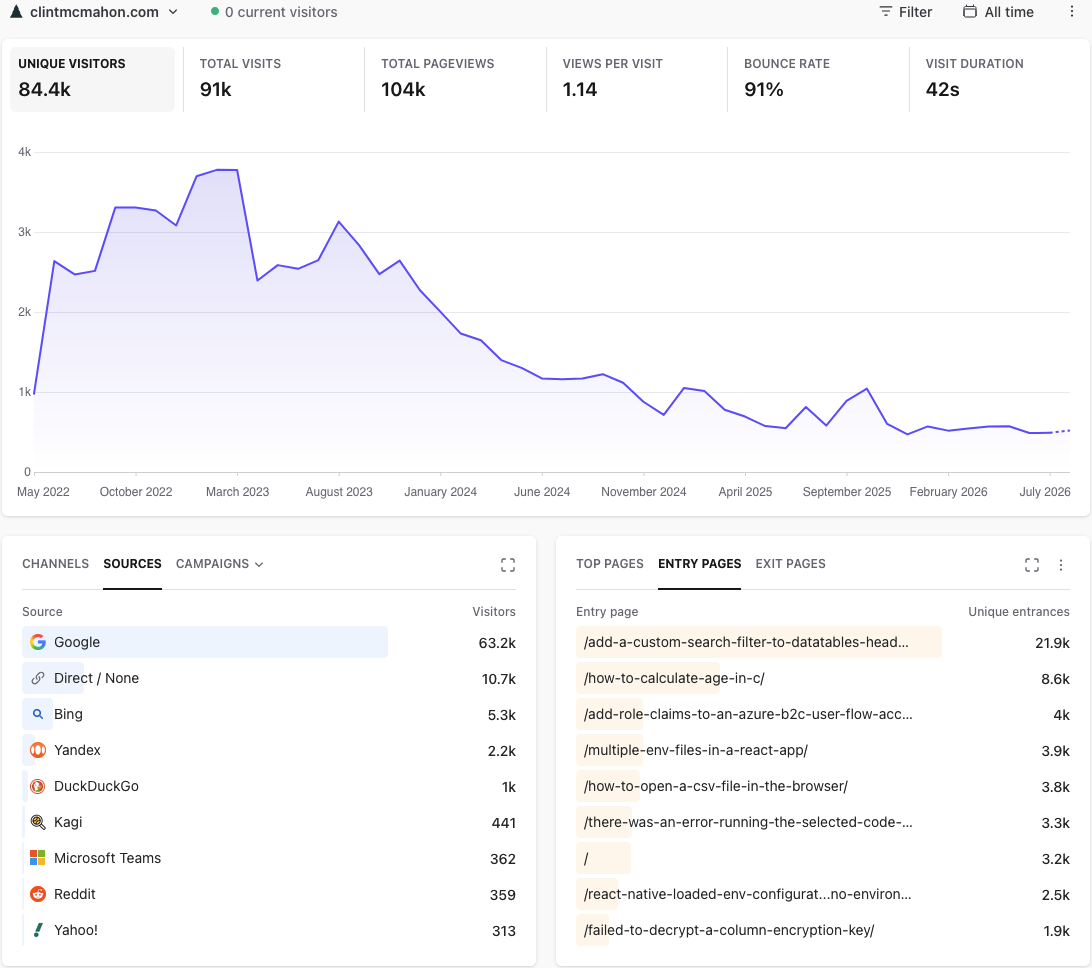
I liked writing the how-to posts and especially enjoyed the emails I got from people telling me how the post helped them fix a bug or get past a wall they hit. It feels like these posts don't matter as much anymore, now AI can spit out these solutions in a sentence or two. AI undercut what I enjoyed about blogging and I thought about stopping this blog because there wasn't anything worthy to write about. Then I started reading more software engineering blogs and saw that isn't true. Even though AI can answer the questions I used to blog about, there are posts that will resonate with people.
What's still relevant to people
The posts that still generate traffic now are thought pieces and explanations I've worked out myself, like things that need a human behind them. Debugging around something AI couldn't help with or a "here's a bug I found and how I fixed it" post. I'll keep writing some of those. But AI is pushing me to write more about the human side of tech: leadership, running teams, why people should tell me their budget upfront. Topics that aren't black and white but need actual experience behind them.
When the AI boom hit, I thought it was the end of tech blogging. Turns out it's not and it just pushes engineers to think harder and make their posts more human and relatable. There's a lot to write about in tech besides bug fixes and code snippets.
I've always liked Sean Goedecke and Simon Willison's style of blogging. From the technical side they include code where it's needed and are good deep dives into the latest technology, how it's being used and how the readers can implement it. Beyond that, they are great at writing about the future of people in the age of AI and engineering leadership.
Simon Willison's post breaking down ChatGPT Work explains what it actually is, what it can and can't do and how you set it up in your environment. Before I read this post I had heard of ChatGPT Work but didn't know exactly what it was. I had a vague understanding of it, but that post explained it so now I have a good handle on what it is and might just use it for a few small tasks.
Sean Goedecke's post "LLMs reward expertise" hits hard and makes me think about how critical thinking and existing knowledge is still useful in software engineering. I've had the same experience with LLMs when I have a good understanding of the subject that I can push back on the LLM. I often get more precise and correct answers when I can guide the LLM with what I already know.
Blog posts like Simon's and Sean's show that there is a space left for tech blogging along side AI and LLMS.